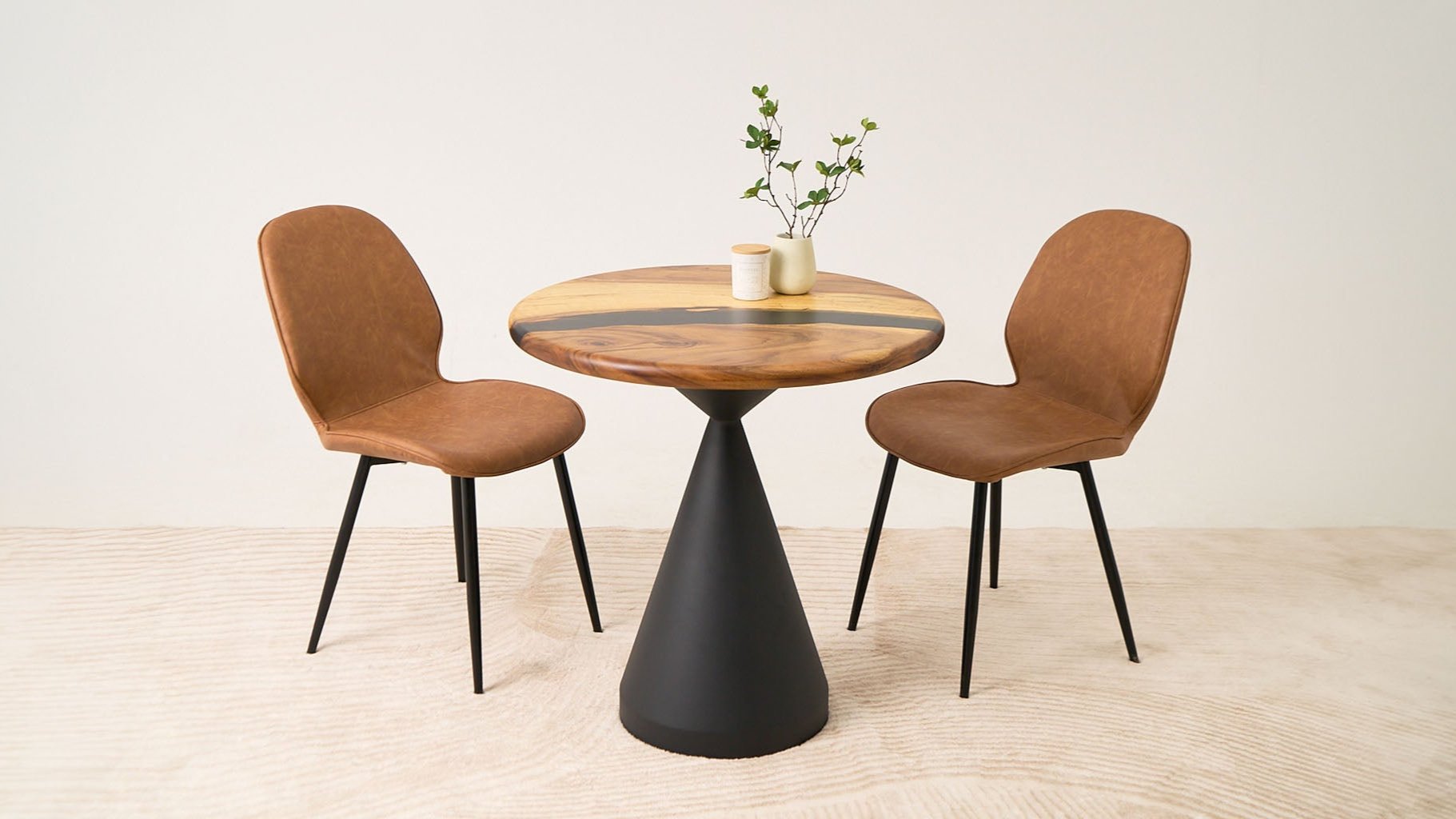

What is a table top? A table top is the flat surface on top of a table. It's what makes a table a table, really. Most of us don't give table top much thought until we're shopping for furniture or thinking about building something ourselves, but it really shapes how a table looks, feels, and holds up.
Today, you'll find table tops made from all sorts of things: solid hardwood, butcher block, glass, marble, and epoxy resin. And, getting a sense of what makes a good table top helps whether you're buying your first dining table, giving an old piece new life, or tackling a woodworking project. Let’s start with what is a tabletop first!
What is a Table Top? The Basic Definition
A table top is the flat, horizontal surface of a table where your coffee mug goes, where you spread out your work, or where everyone gathers for dinner.
-
Table tops come in all kinds of materials: wood (whether solid, plywood, or something like MDF), glass, stone like marble or granite, metal, laminate, or even epoxy resin tables. Each one has its own look and feel.
-
Table top size, shape, and material give a table most of its personality: You'll see rectangular, round, square, and oval tops most often. The tabletop usually sits on or connects to the legs or base underneath.
-
Table top functions: Coffee tables for living rooms (low height for drinks and decor), dining tables for meals, desks for work, conference tables for meetings, console tables for entryways, side tables next to beds or chairs, and bar/counter tables for casual seating.

What is a tabletop? A table top is the horizontal surface component of a table
Credit: Lumber Grand
Shop now: Square Black Epoxy River Table Top 23" x 23"
In woodworking, people often think of the top separately from the table base because you can mix and match. You might build a custom top from reclaimed wood, for instance, and pair it with ready-made legs. It gives you the flexibility to create something that's exactly what you're after.
Table Top Materials List: What Are Table Tops Made From?
The table top material you choose will shape how a table top performs, looks, and lasts:
1. Hardwoods
Woods like oak, maple, walnut, cherry, and mahogany hold up well to daily use and don't dent as easily, which is why they're popular for tables that see a lot of action. Their tight grain and natural density mean they last, whether you're using them at home or in a busier setting.
Hardwoods come from those broad-leaved trees that drop their leaves in fall. They tend to run darker and cost more than softer woods, but there's a reason people keep coming back to them.

The Janka rating (Janka hardness test) is a measure of the hardness of wood
Data: Wood handbook: Wood as an engineering material, USDA
Photo: Lumber Grand
Read more: Best Wood for Table Top
2. Softwoods
Softwoods like pine and fir are easier on the wallet, but they mark up more easily. These softwoods are a good choice if you're planning to paint the table wooden top or if staying within budget matters more than having something bulletproof. They come from evergreen trees and will be lighter in both weight and color than hardwoods.
Fun fact: The terms "softwood" and "hardwood" don't actually refer to how hard or soft the wood is. Instead, they refer to the type of tree it comes from:
-
Softwoods come from those needle-bearing, cone-producing trees like pine, cedar, fir, and spruce.
-
Hardwoods come from broad-leaved trees that shed in the fall, such as oak, maple, cherry, and walnut.
Ironically, some softwoods are harder than certain hardwoods. Yellow pine can be pretty dense and tough, while balsa (technically a hardwood) is famously light and soft.
3. Engineered Wood Materials
MDF (Medium Density Fiberboard) is made by breaking down wood into fibers and bonding them together with resin under heat and pressure. MDF table top gives you a really smooth, even surface that works well under veneer or paint, and it costs about 30 to 50% less than solid hardwood.
Plywood is built from thin layers of wood glued together with the grain running in alternating directions. This makes it stable and strong. That’s why it's less likely to warp than solid wood. You'll find it in different grades depending on what you need it for.

What is a table top — Engineered wood materials for the table top wood
Photo: Inside Out Contracts
4. Alternative Materials
Beyond wood, table tops come in quite a few other materials:
-
Granite and quartz are incredibly durable and handle heat well, which is why you see them in kitchens a lot.
-
Laminate is budget-friendly and easy to wipe down, making it common in commercial spaces.
-
Epoxy resin and synthetic materials hold up outdoors or in damp areas where wood would struggle.
-
Metal (steel or aluminum) gives you that industrial or modern look and can take a beating.
-
Glass works nicely for contemporary spaces and is simple to keep clean.
Best Table Top Shapes and Their Uses
To Lumber Grand, rectangular tops are still the most popular choices, but table tops come in different shapes for different reasons:
1. Rectangular Table Tops
These are the most versatile options. Rectangular shapes fit along walls easily and seat more people in less space, which is why they're everywhere, like dining rooms, conference rooms, and work areas.

High-quality epoxy resin can form a tough, scratch-resistant, and waterproof surface.
Credit: Lumber Grand
Shop now: RANDOM RECTANGLE TABLE TOP
2. Round Table Tops
Round table tops are nice for conversation since everyone's the same distance from the center. They work well in tighter spaces because there are no sharp corners to navigate around. That said, you can't push them against a wall without wasting space.

Round tops work well in smaller spaces because they don’t have sharp corners
Credit: Lumber Grand
Shop now: Round Wooden Epoxy Table Top 19" Diameter
3. Square Table Tops
A Square wooden table top is also suitable for a smaller dining spot or cafe setup. They comfortably seat two to four people, and you can push a few together when you need a bigger surface.

Square wood tables are perfect for locations that are square-shaped
Credit: Lumber Grand
Shop now: Square Dining Wood Table with Epoxy River Design 29" x 29"
4. Special Live Edge Table Tops
Live edge tops keep the natural, uncut edge of the wood visible, often with the bark removed but the organic shape intact. They bring a bit of the outdoors in and work well if you're after something with more character than a standard straight-edged table.
That's why we also specialize in handcrafted natural wood table tops, including unique live-edge pieces that celebrate the wood's organic beauty. Each one is utterly unique because no two trees grow the same way.

4 to 6 seatings around live-edge table tops
Credit: Lumber Grand
Shop now: Live Edge Dining Table Top 43" x 36" Natural Slab
5. Oval Table Tops
These blend the conversational feel of a round table with the practicality of a rectangular one. You get flexible seating without the sharp corners, which can be nice in busier spaces.
Table Top Styles: From Classic to Contemporary
Beyond material and shape, the style of your table top really sets the tone for a space. Here are the main ones you'll see:
1. Traditional Style Table Tops
Traditional tops lean toward rich, darker wood tones and often have decorative edge profiles. These feel right in formal dining rooms, or anywhere you want that classic, timeless look.

Beyond material and shape, what is a table top style really sets the tone for a space
Credit: Lumber Grand
Shop now: RANDOM RECTANGLE DINING TABLE - Natural Wood Grain
2. Rustic and Farmhouse Style
Rustic tops embrace the natural character of wood, such as knots, grain variations, and all. They often feature distressed finishes, reclaimed wood, or live-edge designs that keep the tree's organic shape.
More so, the finish is usually matte rather than glossy, which gives them that lived-in, approachable feel. These fit naturally in country homes, cabins, or anywhere you want things to feel relaxed and casual.

Rustic and farmhouse styles embrace the natural character of wood
Credit: Lumber Grand
Shop now: Live Edge Dining Table Top 60" x 34" Natural Wood & 48" x 28" Wood Slab
3. Modern and Contemporary Style
Modern table tops focus on clean lines and simplicity. You'll see sleek surfaces in materials like glass, polished concrete, or wood with a smooth, uniform finish. These epoxy tables with their warm finish and striking river designs fall into this category, too.

Modern table tops focus on clean lines and simplicity
Credit: Lumber Grand
Shop now: Square Black Wooden Epoxy Dining Table 29" x 29"
4. Industrial Style
Industrial table tops mix materials. You can think of wood paired with metal accents or raw steel edges. The wood might look weathered or have a rough-sawn texture, and the overall feel leans into that warehouse or loft vibe. You'll often see thicker tops with visible hardware and a utilitarian edge that works in modern offices or urban homes.

Wood table top paired with metal accents or raw steel edge
Credit: Lumber Grand
Shop now: Square Dining Wood Table with Epoxy River Design 29" x 29" & Round 29" Diameter
5. Mid-Century Modern
Mid-century table tops feature warm wood tones with gentle tapered edges and organic shapes. The finish is typically smooth and semi-gloss, which highlights the wood's natural grain without being too shiny. These bring that retro 1950s-60s vibe and pair well with vintage or eclectic furniture.
6. Scandinavian Style
Last but not least, Scandinavian table tops lean toward light-colored woods like ash, birch, or light oak. The design is simple and functional with minimal ornamentation.
In addition, finishes are often natural oils or light stains that keep the wood looking pale and airy. This style works beautifully in bright spaces where you want things to feel open and uncluttered.
Table Top Dimensions: Standard Sizes and Thickness
When planning or buying a table top, both the overall size and thickness matter. Here's what's typical for different table types:
|
Table Type |
Length |
Width |
Height (from floor) |
Thickness |
|
Dining Table |
48" — 96" |
36" — 42" |
28" — 30" |
1" — 2" |
|
Coffee Table |
36" — 48" |
18" — 24" |
16" — 18" |
0.75" — 1.5" |
|
Office Desk/Work Table |
48" — 72" |
24" — 30" |
28" — 30" |
1" — 1.5" |
|
Restaurant Tables |
24" — 48" |
24" — 30" |
28" — 30" |
1.25" — 2" |
|
Workbenches |
48" — 96" |
24" — 36" |
34" — 38" |
1.5" — 3" |
|
Custom Furniture Pieces |
Varies |
Varies |
Varies |
2" — 4" |
Pro tips: How thick should a table top be doesn't always mean it's solid wood all the way through. Many impressive-looking thick tops get their size through lamination techniques or torsion box construction. And, that’s rather than being carved from a single massive slab, which would be incredibly expensive and heavy to work with.
You might be interested in: How Thick Should a Dining Table Be
What Makes a Good Table Top? 7 Key Factors to Consider
Not all table tops are created equal. Whether you're buying finished furniture or building your own, here are the seven things that separate a great table top from a mediocre one:
-
Durability and hardness: A good table top needs to handle daily use without showing too much wear. Hardwoods like oak, maple, and walnut score high on the Janka hardness scale. That means they resist dents and scratches better than softer woods like pine.
-
Stability and resistance to warping: Wood naturally expands and contracts with humidity changes. However, a well-made table top keeps warping and cupping to a minimum. So, it’s advised to look for:
-
Properly dried wood (moisture content around 6 — 8% for indoor furniture)
-
Quarter-sawn or rift-sawn lumber, which stays more stable than flat-sawn lumber
-
Adequate thickness for the table's size
-
Construction techniques that allow the wood to move without causing problems
-
Quality of finish: The finish protects the wood and determines how the table feels and looks. That said, a good finish should:
-
Protect against spills, stains, and moisture
-
Bring out the wood's natural grain and color
-
Be appropriate for how you'll use it (food-safe for dining tables)
-
Hold up for years without needing constant touch-ups
-
Aesthetic appeal: A good table top should match your space and style, such as:
-
Wood species and grain pattern
-
Color and finish tone
-
Edge profile (straight, rounded, beveled, live edge)
-
Overall proportions relative to the base
-
Craftsmanship and construction: Quality construction shows in the details:
-
Smooth, even surface without gaps or defects
-
Tight, invisible glue joints between boards
-
Properly finished edges and undersides
-
Secure attachment system that accommodates wood movement
-
Balanced wood selection with boards that match in color and grain
-
Appropriate sizing: Your chosen table top should fit your intended use:
-
Large enough for its purpose without overwhelming the space
-
Proper overhang beyond the base (typically 6-12 inches on each side)
-
Thickness is proportional to the overall size
-
Height appropriate for comfortable use
-
Value for money: Finally, a good table top offers fair value. Solid natural wood costs more than engineered materials, but it lasts longer and can be refinished. Consider your budget, how long you'll use the table, and whether the quality justifies the price.
Don’t skip: How to Get Scratches Out of Wood
At Lumber Grand, we focus on these factors in every table top we craft — from selecting stable, properly dried hardwoods to applying up to 4 durable finishes that protect your investment for years to come.

7 things that separate a great table top from a mediocre one
Credit: Lumber Grand
Shop now: Live Edge Dining Table Top 60" x 24" Wood Slab
You’d better find polyurethane finish for table top (durable and water-resistant), oil finishes (natural look that's easy to repair), and lacquer (smooth, professional appearance).
Understanding Wood Movement in Table Tops: A Natural Reality
Now, one thing that sets solid wood table tops apart is how they respond to changes in humidity. Wood expands across its grain when it absorbs moisture and shrinks when it dries out. It's just what wood does, and it's something you have to plan for when building.
1. Why Wood Movement Matters
In fact, wood moves perpendicular to the grain direction. That means boards get wider or narrower depending on humidity, but they don't really change in length.
Besides, a table top can shift by an eighth of an inch or more across its width over the course of a year. And, that’ll depend on the wood species, how wide the top is, your local climate, and how the wood was cut (quarter-sawn, rift-sawn, or flat-sawn).
2. Leg Attachment Methods that Work With Wood Movement
Good woodworkers use hardware that lets the top move freely while staying attached to the base:
-
Threaded insert nuts with bolts and C-channels:
-
Figure-eight fasteners are metal clips that screw into both the apron and the table top.
-
Tabletop clips (aka Z-clips) hold things secure while allowing movement.
-
Wooden cleats fit into grooves and let the wood expand and contract.
-
Slotted screw holes let screws slide as the wood shifts.
Pro Tips: Most experts are using threaded insert nuts with bolts and C-channels for their DIY table project, and that works really well. You install threaded inserts into the underside of the table top and mount C-channel aluminum tracks to the base.

What is a table top explanation
Photo: Lumber Grand
All of our wood tables above 29” include a set of pre-installed steel C-channel supports on the underside. As a result, the wood can move as it needs to while everything stays nice and secure. Most importantly, it's also easy to take apart if you ever need to move the table.
Read more: How to Attach Legs to a Table
FAQs
1. What is the Best Material for a Table Top?
The best material for a table top is natural woods like oak, maple, and walnut because they’re durable and beautiful for homes and age nicely. But, for commercial tables, laminate or resin holds up well without breaking the budget.
Stone like granite handles heat better than anything else, which is why it shows up in kitchens. And, if you're looking for something more affordable that still looks good, MDF with a veneer gives you a solid middle option.
2. What's the Difference Between Solid Wood and Veneer Table Tops?
The differences between solid and veneer wood tops are:
-
Solid wood tops are made from thick pieces of real wood glued together.
-
Veneer tops have a thin layer of real wood. It’s usually about 1/32 inch or less — bonded to an engineered core like plywood or MDF underneath.
With solid wood, you can sand and refinish it multiple times over the years, and it has that authentic character people love. Veneer gives you the look of wood for less money, but you're limited in refinishing it since that top layer is so thin.
Don’t skip: What is a High Top Table?
3. What is Edge-Grain Versus Face-Grain Construction?
Face-grain construction shows the broad face of the boards with the natural grain pattern visible. It's what you see on most table tops. Meanwhile, edge-grain construction (like butcher block) turns the boards on their side so the edges face up, which creates that striped look.
Edge-grain tops are more stable and durable, and they don't warp as easily. But they take more material and labor to build, so they cost more.
What is a Table Top: Guide Ends Here
To us, a table top is more than just a flat surface. That’s a piece that brings together engineering, material choice, and a bit of craft. From picking the right wood to deciding how to build it, every choice shapes how the table performs, looks, and holds up over time.
Understanding the basics of “what is table top” helps you appreciate what goes into quality furniture. Whatever you choose, a well-made table top shows how function and beauty can work together in furniture.
Thanks for reading! We share new blogs every week, so feel free to check back. Also, if you have questions about what is a table top, or need help finding the right one for your DIY project, we're here to help at Lumber Grand.