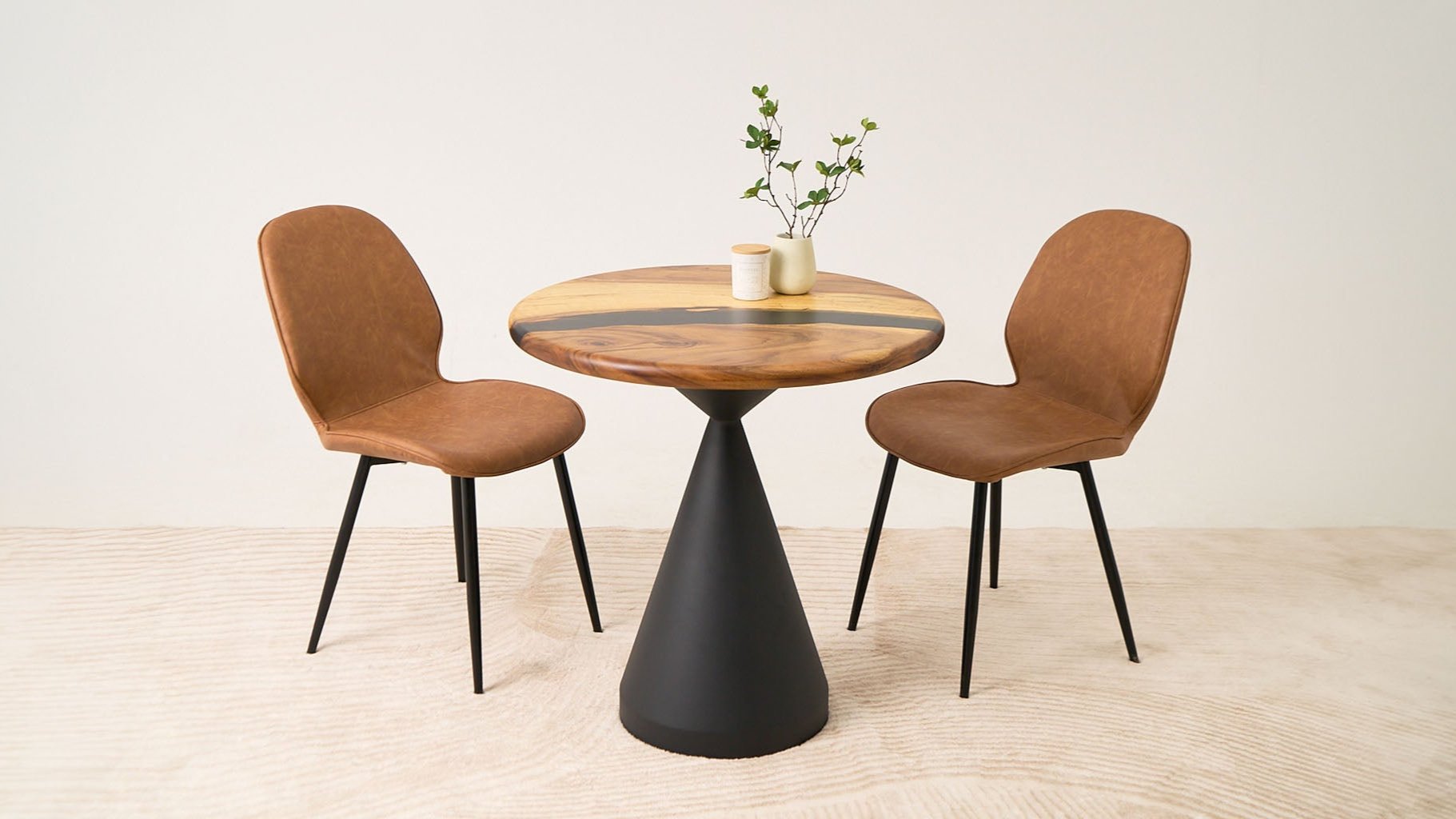

The good part about removing white stain on wood are those cloudy rings are almost never real damage. Instead, they're only moisture caught up inside the finish, not down in the wood itself, which is why they usually come off in a few minutes without sanding. What you should look for first depends on how bad the water stains are & what kind of finish your piece has, and Lumber Grand will walk through all of that in this guide.
Below are the 8 fixes for how to remove white stains from wood table. These ways are ordered from easy to hard levels, which we save for the stubborn marks that won't quit.
|
Method |
Best for |
Time |
Safe for |
Difficulty |
|
Iron + cloth |
Fresh water or heat rings |
5 min |
Most cured finishes |
Easy |
|
Hair dryer |
Light, recent white spots |
10 to 30 min |
All finishes |
Easy |
|
Mayo/petroleum jelly |
Older rings, no heat |
1 to 12 hrs |
Most, test first |
Easy |
|
Baking soda paste |
Light surface spots |
5 min |
Most, gentle |
Easy |
|
Non-gel toothpaste |
Small, fresh marks |
5 min |
Most, gentle |
Easy |
|
0000 steel wool + oil |
Hazy bloom over a wide area |
15 min |
Solvent-based finishes |
Medium |
|
Denatured alcohol/retarder |
Shellac and lacquer only |
10 min |
Shellac, lacquer |
Medium |
|
Store-bought remover |
When DIY fails |
10 min |
Per product label |
Easy |
Why Does Your Wood Appear White Stains?
White stains on wood show up when moisture gets trapped under the protective finish instead of soaking into the raw wood.
When something hot or cold sits on the surface, a little water vapor works into the clear coat and gets stuck. That trapped moisture leaves tiny fractures inside the finish, and those fractures scatter light. To your eye, it shows up as foggy white spots.

What causes stained wood to turn white
Photo: Lumber Grand
That’s why the cause barely matters for the white spot fixes. White water stain, white ring from a cold drink, white heat mark from a hot pan, they all sit in the same spot, the finish layer. Thus, the same short list of methods clears every one of them.
It’s the same story with water marks from a dripping vase or spots left behind after a spill. Heat marks from hot dishes have a couple of quirks of their own, and we go through those in our full guide on how to remove heat stains from wood.
One line worth drawing early:
-
A white mark is a finish problem, and usually a fast one.
-
A dark or black mark means water got past the finish and into the wood fibers, which is a much bigger job.
We come back to that near the end.
Check Your Wood Finish First (So You Don't Wreck It)
Firstly, you should take 30 seconds to figure out what finish you are working with, because it decides which methods are safe for your situation. We can do this by dabbing a little denatured alcohol on a hidden corner with a cotton swab.
-
If the finish turns sticky or soft, you likely have shellac.
-
If alcohol does nothing but lacquer thinner softens it, you have lacquer.
-
If neither one reacts, you’re dealing with a cured varnish or polyurethane.
That continues telling you what to do next:
-
Shellac and lacquer redissolve in their own solvents, so you can re-flow them to release the moisture.
-
Cured varnish and poly won’t redissolve, so heat and oil are your friends instead.
-
To get rid of white stains on varnished wood, we highly recommend sticking with the iron, the hair dryer, or an oil soak, and leave the solvents alone.
Besides, if you’re choosing a finish for a new build or a full refinish, our breakdown of the best finish for a dining table covers how each one handles moisture in the first place.
How to Remove White Stain on Wood: 3 Easiest Fixes for New White Spots
The 3 ways below clear up most of the white marks we see, and any one of them is a fine place to begin. Let’s remove the watermark wood in simple ways before we try something stronger.
1. The Iron and Cloth Trick (Most Reliable)
Iron + cloth is what we tell people to remove white stains from wood first, especially when the ring is still new. Dry heat pulls the trapped moisture back out through the finish. We’ve had customers email just to say it worked when nothing else did.
-
Step 1: Put a clean and lint-free cotton cloth or a tea towel flat over the white mark
-
Step 2: Turn the iron to low or medium heat with steam OFF
-
Step 3: Press the iron on the cloth and glide it back and forth for about 10 to 15 seconds
-
Step 4: Pull the cloth back and take a look. If the mark is still there, you’ll need to go again in short bursts.
-
Step 5: Once the white is gone, work a tiny dab of oil or furniture polish into the spot to bring the shine back.

How to remove white stain on wood table with iron and cloth
Photo: Youtube | NicasCrib
Note: Most guides tell you NO steam. That’s the safe default, because steam adds water, and water is the big reason for white stains on wood.
Some people do use a low steam setting on a very fresh mark and get away with it, since the heat drives out more moisture than the trace it adds. Even so, we still say keep it dry.
2. Use a Hair Dryer to Remove White Stain on Wood
A hair dryer is another gentle heat method to remove white water stains from wood, and it works on ANY finish since nothing ever actually touches the surface. It takes some patience, but it’s about as close to foolproof as you can get.
-
Step 1: You set the dryer to the lowest heat setting (not the cool setting).
-
Step 2: Hold the dryer about 2 — 3 inches away and keep it moving in small circles.
-
Step 3: Touch the wood frequently. If it feels hot, you should stop and let it cool for 10 minutes.
-
Step 4: Keep doing until the white spots lift from wood table top.

How to remove white stain on wood with hair dryer
Photo: YouTube | Abbotts At Home - DIY & Home
We’ve seen people run a hair dryer over a single ring for the better part of 2 hours before it finally disappeared. Sounds slow, but the mark really does vanish in the end, and you walk away with zero risk to the finish underneath.
3. Mayonnaise or Petroleum Jelly (No Heat Needed)
If heat makes you nervous, oil pulls the same trick from the other direction. The oil seeps into the finish and slowly pushes the trapped moisture out. Mayonnaise is the classic pick to remove white stains from wood because it stays put. And, the interesting thing is in the oil and the wait, not the eggs.
-
Step 1: Spread a generous layer of mayo or petroleum jelly right over the white mark.
-
Step 2: Leave it for 1 to 2 hours, or overnight for an old white ring.
-
Step 3: Wipe it off with a clean cloth and buff the area dry.
Note: On some softer or older finishes, oil-based products can soften the finish itself and leave a sticky, dull patch behind. Therefore, it’s best to test on a hidden spot first, and don’t let oil sit for hours on a finish you’re unsure about.
How to Remove White Stains on Wood: 5 Fixes for Old White Spots
If those first 3 ways above didn't help you clear the mark fully, the next few options dig in a little deeper. Just go gentle with them, and stop the second you see the white stains disappear on wood.
1. Baking Soda Paste
Baking soda is our pick for those light water spots on wood that haven't set into the wood yet. It's a mild abrasive, though, so a soft touch goes a long way with this one.
-
Step 1: Mix 1 tablespoon of baking soda with 1 teaspoon of water into a thick paste.
-
Step 2: Rub it into the stain with a soft cloth, and please follow the wood grain.
-
Step 3: Wipe clean with a damp cloth, then dry the area right away.
2. Non-Gel Toothpaste
Plain white toothpaste takes care of small, fresh white marks about the same way baking soda does, just easier on the finish. But, you should note that ONLY use the creamy kind, the regular non-gel toothpaste.
-
Step 1: Put a small dab on a soft, damp cloth.
-
Step 2: Rub gently over the mark for no longer than a minute.
-
Step 3: Stay on the stain only. Working the clean finish around it can dull the sheen.
-
Step 4: Wipe clean and buff dry

How to remove white stain on wood with baking soda and non-gel toothpaste
Photo: YouTube | Abbotts At Home - DIY & Home
3. 0000 Steel Wool and Oil
When the white is a hazy bloom spread across a wider area rather than a tight ring, very fine steel wool with a little oil evens it out. This haze is called blushing, and it is common on older shellac and lacquer pieces.
This is also the gentlest way to freshen a tired top. You can read the whole approach in our guide to refinishing a table top without stripping.
-
Step 1: Dip 0000 steel wool, the finest grade, in a little mineral or linseed oil.
-
Step 2: Buff lightly and evenly, always with the grain, across the whole hazy area.
-
Step 3: Keep the pressure feather-light and check often.
-
Step 4: Wipe clean and apply a coat of wax once the haze is gone.

Removing white stains on wood with steel wool and oil
Photo: ©gettyimages on Canva.com
4. Denatured Alcohol or Lacquer Retarder
This one's only for shellac and lacquer, which is why we'll get you to do that finish test in the next section first. What's happening here is the solvent re-flows the very top layer of your finish for a second, and that gives the trapped moisture a way to escape.
If your piece is shellac, grab a cotton rag, dampen it lightly with some denatured alcohol, and wipe it over your mark. If you've got lacquer, a quick wipe of lacquer thinner or a light mist of lacquer retarder will do the same thing for you.
Keep your rag barely damp on this one. If you go too heavy with the solvent, you'll soften the finish and end up smearing it on yourself.
And if you're not totally sure whether you're working with shellac or lacquer, it’s better to skip this method for now. Just go back to the heat trick or the oil method we covered earlier.
5. A Store-Bought Water Mark Remover
When the home fixes don't quite get you to remove white stain on wood, a purpose-made product will usually finish the job for you, and you're only out a few bucks. Restorers keep this stuff on their shelves for a reason.
What you want to look for is a dedicated watermark remover at the hardware store, or you can grab a finish restorer and apply it with some 0000 steel wool.
They're budget-friendly, they work fast for you, and save you from jumping straight into a full refinish of your wood.
Frequently Asked Questions
1. What Causes Stained Wood to Turn White?
Wood turns white on you when moisture is trapped underneath the finish instead of soaking down into the wood itself. What happens is your hot mug or your sweating glass pushes water vapor up into the clear coat, and once it's in there, it creates these tiny little fractures that scatter the light.
2. How to Get White Haze Off a Wood Table?
To get white haze off a wood table, lay a clean cotton cloth over the spot and press a dry iron on it, set to low heat. Do this in short passes of about 10 to 15 seconds at a time, lifting the cloth and checking on your progress as you go. The gentle heat will slowly pull the trapped moisture back out for you.
If you don't want to use any heat at all, mayonnaise left sitting on the mark for about an hour is a really solid backup you can try.
3. How to Get Stains Out of White That Have Been Sitting for Years?
Old white stains on wood are harder to lift because the moisture has settled deep in the finish. In such cases, you should start with the iron method, then try an overnight mayonnaise or petroleum jelly soak. If the mark still will not budge, a finish restorer or light buffing with 0000 steel wool and oil usually clears it.
4. How to Get White Foggy Marks Off of a Wood Finish?
White foggy marks on a wood finish, called blushing, come from moisture caught in the top coat. You can easily get rid of them by warming the area gently with a hair dryer on low, keeping it moving, until the fog clears. With a wider haze, buff lightly with 0000 steel wool dipped in a little oil.
How to Remove White Stain on Wood: Final Verdict
As you can see, most white stains on wood come off faster and cheaper than people expect, so start with the gentlest fix and only work your way down the list if you have to.
Heat and oil handle the large majority, and the finish test keeps you out of trouble on the rare, tricky piece. We build wood tabletops every day at Lumber Grand, so if a mark still has you stuck, reach out anytime. And while you are caring for your table, here is how we get scratches out of wood, too.
Thank you for reading our guide on removing white stain on wood. See you in the next section!