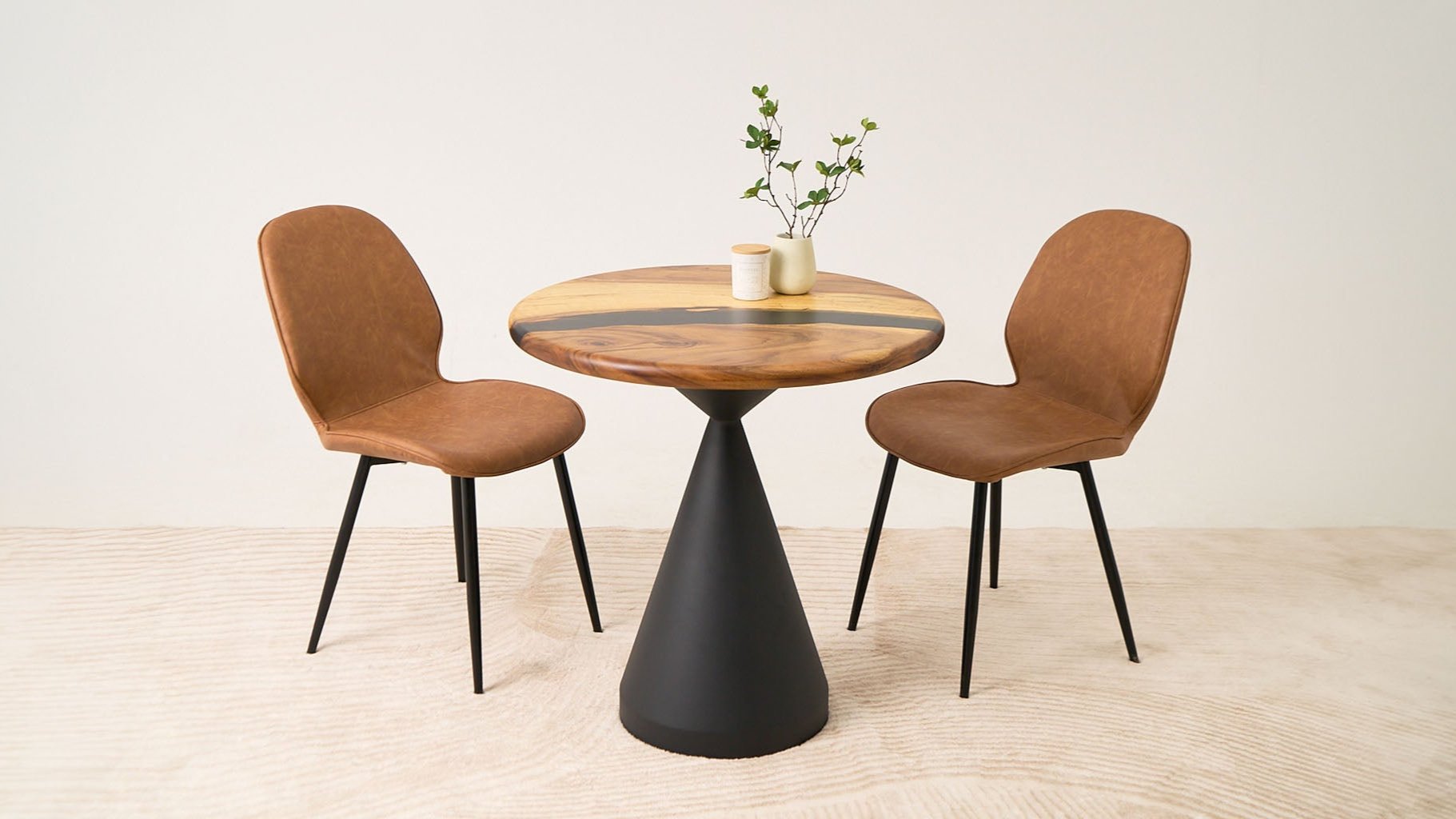

Epoxy outdoor table work beautifully, but only when you nail UV protection and proper curing. Most DIY failures occur because people grab indoor-formula epoxy for outdoor uses or skip the weatherproofing layer entirely.
In this blog, Lumber Grand will guide you with 5 straightforward steps to build epoxy resin outdoor tables that last for years, plus the real benefits that make epoxy worth your time and investment. Let’s get into it!
Can Epoxy Tables Be Used Outdoors?
YES, if the table is made with UV-resistant outdoor epoxy for wood and proper weatherproofing techniques. Basic craft-store epoxy will yellow, crack, and fail within months when exposed to UV rays and temperature changes. That’s where most DIYers go wrong, as we’ve mentioned.

Can epoxy tables be used outdoors?
Credit: Lumber Grand
Shop now: Epoxy Tables
For a DIY epoxy outdoor table that lasts, you need UV-resistant epoxy resin specifically formulated for outdoor use. These resins contain additives that block UV degradation. Better yet, you can also add a marine-grade UV topcoat as your final layer. This is the same product professionals use on boat decks that face brutal sun and saltwater year-round.
So, use the right materials and techniques, and your coffee epoxy table will handle years of sun, rain, and temperature swings without breaking down.
5 Key Benefits of an Epoxy Outdoor Table
Most people tend to focus on the appearance of epoxy, but the practical benefits for outdoor furniture are what matter the most. Here is why epoxy resin outdoor tables outperform traditional options:
-
Unmatched weather resistance: When sealed properly with a UV topcoat, epoxy creates a waterproof barrier that withstands rain, humidity, and temperature swings. Unlike varnish or polyurethane, which might crack and peel over time, marine-grade epoxy for outdoor tables stays intact through seasons of exposure.
-
Superior durability against impacts: Epoxy cures harder than most wood finishes. Your outdoor table top epoxy withstands those impacts that would scratch or dent conventional outdoor furniture, such as dropped plates, dragged chairs, or hailstorms. This matters especially for high-traffic patios and decks.
-
Low maintenance requirements: It’s time to say goodbye to annual refinishing. A quality epoxy resin for outdoor table simply needs occasional cleaning with soap and water.
-
UV protection for the wood: The right outdoor epoxy for wood doesn’t just protect itself. It shields the wood underneath from sun damage, moisture penetration, and rot. Your natural wood table stays preserved and beautiful for years longer than unprotected outdoor lumber.
-
Stunning aesthetic that lasts: That glossy, crystal-clear finish showing off your wood grain? It stays that way. While other finishes fade and cloud over time, properly made outdoor epoxy table maintain their visual impact year after year.

Outdoor epoxy table ideas
Credit: Lumber Grand
Shop now: RANDOM RECTANGLE DINING TABLE - Natural Wood Grain
How to Make an Epoxy Outdoor Table: 5 Quick Steps
Building an epoxy outdoor table isn’t complicated, but the order matters. Skip one step or use the wrong product, and you’ll end up with yellowing or cracking down the road. Follow the exact process Lumber Grand laid out here.
Step 1: Gather Your Materials & Prep the Wood
First, you have to acquire the appropriate epoxy resin for outdoor use. Opt for UV-resistant or marine-grade epoxy resin instead of the standard tabletop epoxy. Brands such as TotalBoat or Stone Coat Countertops offer outdoor epoxy for wood that does not yellow. You can refer to the best epoxy for outdoor table options, such as:
-
TotalBoat Halcyon Marine Varnish + TotalBoat TableTop Epoxy
-
Stone Coat Countertops UV-Resistant Epoxy
-
Pro Marine Supplies UV Epoxy Resin
-
MAS Epoxies Flag Resin + LV Resin System
-
EcoPoxy UVPoxy
For the best wood for epoxy, choose a rot-resistant species, such as cedar, teak, or white oak, when possible. Remember to check the moisture content of the wood, too. It needs to be under 12% because epoxy and wet wood do not mix.
Then, sand down your wood to 120-grit, and remove every speck of dust with compressed air or a tack cloth. Anything left behind will show up as imperfections in your finish.

How to make an epoxy table for outdoor use
Photo: Lumber Grand
You might like: Best Table Top Epoxy
Step 2: Seal the Wood Surface to Prevent Bubbles
Raw wood is porous and full of air pockets. Pour epoxy directly on unsealed wood, and you’ll get bubbles rising through your finish for hours. It’s frustrating and ruins the clarity of your epoxy outdoor table. So, apply a thin seal coat first.
-
Wipe the entire surface with rubbing alcohol (upper 90%) to help the epoxy grip better
-
Mix a small batch of your UV-resistant epoxy. Brush it onto the wood surface using a foam brush.
-
Work it into the grain, especially on end grains and any cracks. This seal coat fills the pores and traps air before your main pour.
-
Let this seal coat cure for 4 — 6 hours until it’s tacky but not fully hardened. Some manufacturers refer to this as the “green stage”. Pouring your flood coat during this window creates a chemical bond between layers, preventing delamination issues later.

How to epoxy a table top with the first seal coat
Photo: Upstart Epoxy
Step 3: Mix the Epoxy & Hardener
Mixing epoxy isn’t complicated, but precision is everything. Use a digital scale to measure your resin and hardener according to the manufacturer’s exact ratio, typically 1:1 or 2:1. Eyeballing measurements can lead to soft, sticky spots that never fully cure, and outdoor temperature swings can expose every mixing mistake.
Then, combine both parts in a clean mixing container and stir slowly for at least 3 — 5 minutes. You should scrape the sides and bottom constantly. Unmixed epoxy that sticks to the container walls causes curing problems. Stir slowly and deliberately to minimize the formation of air bubbles.
Step 4: Pour the Epoxy Layer
Pour the mixed epoxy in a steady stream across your sealed wood surface. You can start from one end and work your way to the other. DON’T dump it all in one spot. Use a foam brush or plastic spreader to guide epoxy into edges, corners, and around any inserts or objects.
Within 10 — 15 minutes after pouring, bubbles will start rising to the surface. You can pass a propane torch or heat gun about 6 — 8 inches above the surface in quick, sweeping motions. The heat pops surface bubbles instantly. Don’t linger in one spot, or you’ll scorch the epoxy.

How to epoxy outdoor table
Photo: Upstart Epoxy
Read more: Epoxy Table for Beginners
Note: For an epoxy outdoor table, you pour at least 1/8-inch thick for proper weather protection. Most epoxies have a maximum pour depth per layer, typically ranging from 1/4 to 1/2 inch, depending on the product.
If you need thicker coverage, pour multiple layers and wait until each layer reaches the tacky stage (4 — 8 hours) before adding the next. For a standard outdoor table, one flood coat after your seal coat is usually enough.
Step 4: Let the Epoxy Cure Fully
Your outdoor epoxy table top needs time to fully cure before it can withstand outdoor conditions. Most UV-resistant epoxies require 24 — 72 hours to achieve full hardness, depending on temperature and humidity.
Don't touch it, don't move it, and absolutely don't apply your topcoat too early. Epoxy that feels dry on top might still be soft underneath. You should refer to your product's technical data sheet for precise cure times.
Keep your working area between 70 — 75°F while the mixture cures. If it’s too cold, the epoxy will remain tacky forever. If it’s too hot, it’ll either crack or form excessive bubbles.

How to make a resin table top
Photo: Lumber Grand
You might be interested in: How Long Does Epoxy Take to Dry on a Table?
Step 5: Apply a UV-Protective Topcoat for Outdoor Durability
This is where the difference between having an epoxy end table that will last two years or twenty is made. UV-resistant epoxy still requires an extra layer of protection to handle continuous exposure to the sun. Apply a marine-grade UV topcoat. A product like TotalBoat Gleam, System Three WR-LPU, or Varathane Spar Urethane is formulated for a boat deck that can face brutal conditions.
Wait until your epoxy is fully cured (a minimum of 72 hours) before applying the topcoat. Lightly sand the epoxy surface with 320-grit sandpaper to create a tooth for adhesion. Wipe away all dust with a tack cloth dampened with denatured alcohol.
Apply the UV topcoat with a high-quality foam brush or an HVLP sprayer in thin, even coats. For outdoor wood tables or furniture, experts recommend applying at least 3 coats. Allow each coat to dry according to the manufacturer's instructions, typically 4 — 6 hours, and sand lightly with 220-grit between coats.
Pro tip: Apply topcoat at 65 — 85°F with low humidity. Temperature fluctuations during application can cause an orange peel texture and poor adhesion.
Finally, once your topcoat is fully cured and hardened, it’s time to attach the legs. For epoxy outdoor tables, choose powder-coated steel, stainless steel, or treated wood legs that resist rust and weather damage. Use threaded inserts or metal brackets secured directly into the wood (not the epoxy) for maximum stability.

Best UV topcoats for outdoor table top epoxy
Photo: TotalBoat & The Home Depot
Related blog: Best Finish for Epoxy River Table
Common Mistakes to Avoid When Making an Epoxy Outdoor Table
We’ve seen plenty of failed table top epoxy for outdoor use, and most failures come down to the same preventable mistakes. Here’s what goes wrong and how to avoid it:
-
Indoor epoxy used outdoors: Those basic tabletop epoxy isn’t built for outdoor use in environments exposed to UV light. Within a few months, it turns yellow and eventually cracks. Always choose UV-resistant or marine-grade epoxy for outdoor use. Check the technical data sheet. If it doesn’t mention UV stability, you shouldn’t use it outside.
-
Skipping the seal coat: Pour epoxy directly onto raw wood, and you’ll spend hours fighting bubbles. The seal coat fills the pores in the wood and prevents air from rising into your finish. This single step saves you tremendous frustration.
-
Pouring at the wrong temperature: Epoxy is temperature-sensitive. Below 70°F, it cures too slowly and stays tacky. Above 85°F, it cures too quickly, traps bubbles, and can crack from the heat buildup. You need to maintain the workspace between 70 — 75°F during application and initial curing.
-
Forgetting the UV topcoat: Even UV-resistant epoxy requires a protective topcoat for long-term outdoor durability. That marine-grade layer blocks the constant sun damage. Without it, your epoxy outdoor table will degrade faster than it should.
-
Rushing the cure time: Touching your table too early, moving it before it's fully hardened, or applying a topcoat to partially cured epoxy compromises the whole finish. Follow the manufacturer's recommended cure schedule precisely.
-
Application of epoxy in direct sunlight UV exposure while curing causes surface problems and uneven hardening. Do the work in shade or indoors. Then, move your completed table outside once everything has cured, and you have applied the topcoat.

Avoid these mistakes to create the best epoxy outdoor table
Credit: Lumber Grand
Shop now: Round Natural Wood Table with Epoxy Center 29" Diameter
Maintenance & Care Tips for Long-Lasting Epoxy Outdoor Table
One of the key benefits of using epoxy on an outdoor table is the low maintenance it requires. Low, however, does not mean zero. A few simple habits will keep your table looking pristine for years to come, rather than wear out after just one season.
-
Cleaning epoxy table regularly: Just wipe it down with mild soap and water every few weeks. A soft cloth or sponge will do. Avoid aggressive chemicals, like acetone or bleach-based cleaners, they’ll dull the UV topcoat. For stubborn dirt or tree sap, warm soapy water and patience work better than aggressive scrubbing.
-
Reapply UV topcoat every 2 — 3 years: Even marine-grade topcoats break down with constant sun exposure. Plan to lightly sand with 220-grit and apply a fresh coat of UV protection every couple of years. This 30-minute task extends your table’s life significantly.
-
Use coasters and placemats: While outdoor table top epoxy resin resists heat better than most finishes, extremely hot items, like cast-iron pans fresh off the grill, can leave heat marks. Coasters prevent this and keep your surface flawless.
-
Avoid dragging heavy objects: Although epoxy is tough, sharp edges on metal or concrete pavers can still scratch the topcoat. Always lift items rather than sliding them.
-
Harsh weather cover (optional): Epoxy outdoor tables handle rain and snow just fine. However, furniture covers during winter or extended storms reduce UV exposure and keep debris off. It’s not required, just smart if you wish to minimize long-term maintenance.
You might like: How to Clean Epoxy Table Top

Cover the epoxy resin for outdoor table during harsh weather
Credit: Lumber Grand
Shop now: Live Edge Table Top
FAQs
1. How Long will Epoxy Last Outdoors?
Epoxy can last for around 10 years outdoors when built with UV-resistant resin (1/8 inches thickness) and a marine-grade topcoat. Here’s how the protection breaks down:
-
First, your polyurethane topcoat (outdoor formula) can withstand 5 — 8 years of constant UV exposure and weathering before it requires refinishing.
-
After that, the underlying epoxy layer takes over. Epoxy exposed to atmospheric weathering can erode by up to 1 mil (25 µm) per year. With a proper 1/8-inch thick layer, this epoxy outdoor table can last up to another 3 years.
The key features include using outdoor-rated epoxy (not craft store resin), a high-quality UV topcoat, and reapplying that topcoat every 2 — 3 years. Use the right materials and follow the process we outlined, and your table will easily handle a decade or more of weather exposure.
2. Does Epoxy Hold Up in Weather?
Yes, epoxy can withstand weather when it's formulated for outdoor use. UV-resistant or marine-grade epoxy resists rain, humidity, temperature fluctuations, or sun exposure with no cracks, peeling, or delamination. The protective topcoat shields the epoxy from constant UV bombardment.
3. Is Epoxy 100% Waterproof?
No, epoxy isn’t technically 100% waterproof. It’s rather highly water-resistant. When fully cured, it resists water penetration extremely well and won’t absorb moisture like wood or other porous materials do. For practical outdoor furniture purposes, it effectively keeps water out.
4. Will Epoxy Crack in Hot Weather?
No, quality UV-resistant epoxy won’t crack in hot weather when applied correctly. Epoxy is designed to handle temperature fluctuations without breaking down. However, indoor epoxy or epoxy mixed incorrectly can crack from heat expansion and contraction.
Epoxy Outdoor Table: Guide Ends Here
That’s everything you need to build an epoxy outdoor table that withstands real weather. Simple as can be, once you know which epoxy to use, how to seal properly, and why that UV topcoat matters so much. Most people overthink it or use the wrong product, but you won't.
The investment in quality epoxy and topcoat pays for itself when you consider how long the table lasts and how little maintenance it requires. Compare that to the refinishing needed every season on wooden outdoor tables, and its value becomes fairly obvious.
For specific questions regarding the epoxy outdoor table project, please don't hesitate to contact us directly. Lumber Grand has extensive experience with it all. Visit our blogs for more in-depth guides on epoxy techniques, wood finishing, and live-edge furniture projects. See you in the next blog!