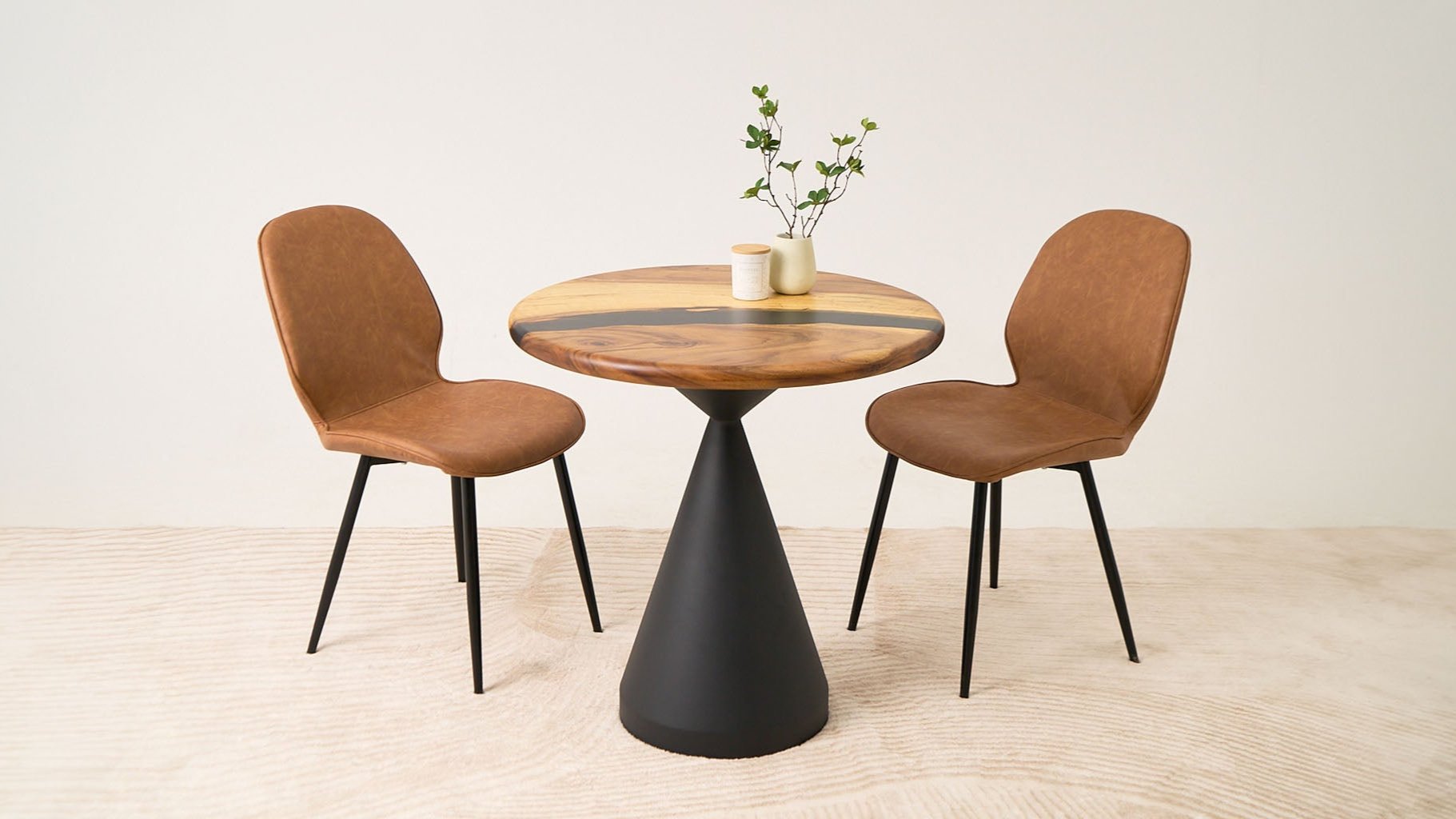

Choosing between epoxy vs polyurethane is the most common question we get from customers at Lumber Grand. Both finishes protect wood, but they behave very differently once they land on your table.
Thus, before you buy a kit or a can, let us walk you through what we have learned from finishing hundreds of table tops in our workshop. We will start with the quick answer for epoxy vs polyurethane for table top, then dig into the details step by step.
The Quick Answer (If You Only Have 30 Seconds)
Pick epoxy if you want a thick, glassy, waterproof surface, or if you're building a river table with deep pours. Pick polyurethane if you want a natural wood look, an easier application, and a finish you can repair later without redoing the whole top.
|
Epoxy |
Polyurethane |
|
|
Look |
Thick, glossy, glass-like |
Thin, natural, matte to gloss |
|
Thickness |
1/8 inch per flood coat |
1 to 3 mils per coat (paper-thin) |
|
Heat limit |
Softens around 120 to 125°F |
Handles warm mugs better, still no hot pans |
|
Water |
Fully waterproof |
Water resistant |
|
Sunlight |
Yellows without UV stabilizers |
Water-based stays clear, oil-based ambers |
|
Repairs |
Hard, usually a full re-flood |
Easy, just scuff and recoat |
|
Cost for one dining table |
$90 to $130 |
$15 to $30 |
|
Full cure |
5 to 7 days |
1 to 30 days, depending on type |
Now let's unpack each of these, because the details are where most projects go wrong.
What Is Epoxy?
Epoxy is a two-part liquid. You mix a resin with a hardener, pour it over your table, and it cures into a hard, clear plastic shell. A single flood coat self-levels at about 1/8 inch thick, and cured table top epoxy reaches around 82 Shore D hardness, which is harder than a bowling ball's surface.
Here is what that means in practice. When we pour epoxy in our shop, we get about 40 minutes of working time at 77°F. The surface turns tack-free in 4 to 8 hours, but the table is not ready for daily use for 5 to 7 days. Plan for that.
People often ask us whether epoxy resin vs polyurethane is a different comparison than epoxy vs polyurethane. It’s the same one. "Epoxy" and "epoxy resin" mean the same product in the tabletop world.
What Is Polyurethane?
Polyurethane is a protective film you brush, wipe, or spray onto wood. Each coat is only 1 to 3 mils thick, so a finished poly top is roughly 100 times thinner than one epoxy flood coat. Instead of sitting on top like glass, it hugs the wood grain and keeps the natural texture you can feel.
You will find two types on the shelf, and the difference matters:
-
Water-based polyurethane dries fast. You can recoat in about 2 hours and finish 3 to 4 coats in a single day. It also stays crystal clear for years.
-
Oil-based polyurethane takes 4 to 24 hours between coats and needs up to 30 days to reach full hardness. It adds a warm amber tone that deepens over time. Some people love that glow on walnut and oak. On white oak or light maple, you may not.
Epoxy vs Polyurethane: 7 Differences that Actually Matter
1. Durability and Scratches
Epoxy wins on raw hardness. It shrugs off impacts that would dent a poly finish. That said, polyurethane is more flexible, so it moves with the wood as seasons change instead of stress-cracking. For a dining table that gets keys, plates, and homework dropped on it daily, both hold up well. The real difference shows up in point 6, repairs.
2. Heat Resistance
This one surprises people. Tabletop epoxy softens at around 120 to 125°F. A fresh cup of coffee sits at 130 to 160°F, so a mug straight from the machine can leave a soft ring in epoxy. Polyurethane tolerates warm items a bit better, but honestly, we tell every customer the same thing: use a trivet on either finish.
3. Sunlight and Yellowing
Standard epoxy yellows with UV exposure, even indoors near a bright window. Quality kits include UV stabilizers that slow this down, but don’t stop it outdoors. Water-based polyurethane holds its clarity best, which makes it our pick for epoxy vs polyurethane for wood furniture that lives near windows or on a covered patio.
4. Waterproofing
If you're weighing epoxy vs polyurethane waterproofing, epoxy takes it. A cured flood coat is a sealed, waterproof shell, which is why bar tops and kitchen islands love it. Polyurethane is water-resistant rather than waterproof. It handles spills and wet glasses fine as long as you wipe them up, but standing water can eventually work through the thin film at seams and edges.
5. Application Difficulty
Polyurethane is the beginner-friendly option. You open the can, brush on thin coats, and sand lightly between them. Epoxy demands more from you. You measure the two parts exactly, mix thoroughly, pour within the working time, and chase bubbles with a torch. Get the ratio wrong and the whole pour can stay sticky forever. If this is your first finishing project, start with poly.
6. Repairs Down the Road
Here is where polyurethane quietly wins for busy households. When a poly finish gets scratched, you scuff-sand the area and wipe on a fresh coat. Done in an afternoon. When epoxy gets deeply scratched or chipped, a spot fix almost never blends invisibly, so you usually sand the entire top and pour a new flood coat.
7. Cost
Epoxy costs several times more. A 1-gallon tabletop epoxy kit runs $90 to $130 and covers about 12.8 square feet at 1/8 inch, which is roughly one dining table. A $15 to $30 quart of polyurethane covers around 125 square feet per coat, enough for several tables. If budget drives your decision, poly is the clear value.
Epoxy vs Polyurethane for Table Tops: Our Workshop Verdict
So, which should you actually use? After hundreds of builds, here is how we decide epoxy vs polyurethane for table top projects at Lumber Grand:
Choose epoxy when:
-
You want that deep, glossy, glass-like surface
-
You're building a river table or embedding objects
-
The table will face heavy moisture, like a bar top or outdoor-kitchen island under cover
-
You're okay waiting a week for a full cure
Choose polyurethane when:
-
You want the wood to look and feel like wood
-
The table sits in direct sunlight
-
You want easy future repairs
-
You're finishing your first project or working on a budget
Is polyurethane alone good enough for a table top? Yes, absolutely. Three coats of oil-based poly or four coats of water-based poly protect a dining table for years of daily use. You don’t need epoxy unless you specifically want the thick glass look or true waterproofing. If you go the poly route, we compared our favorite products in our guide to the best polyurethane for table tops.
Can You Use Both Together? (Yes, and Pros Often Do)
The two finishes are not enemies, and professionals combine them all the time. Flooring contractors pour an epoxy base for its bond strength, then seal it with a polyurethane topcoat for UV and scratch protection.
You can borrow the same idea for furniture. A thin polyurethane topcoat over cured epoxy adds scratch resistance and slows yellowing on a table that sits near a window. Just scuff-sand the epoxy first so the poly grips.
This also answers the polyurethane resin vs epoxy resin confusion we hear a lot. Polyurethane sold for furniture is a wipe-on or brush-on coating, not a pourable casting resin.
If someone tells you to “pour polyurethane” on a table, they are talking about a specialty industrial product, NOT the can at the hardware store.
Pros and Cons of Epoxy Tables at a Glance
Are you thinking about buying or building an epoxy table? Here is the honest list we give our own customers.
-
Pros: Stunning depth and gloss, fully waterproof surface, lets you embed wood, stones, or colors, extremely hard surface, and food-contact safe once fully cured if the product meets FDA 21 CFR 175.300.
-
Cons: Yellows in direct sun over time, soft spots from hot mugs above 125°F, difficult spot repairs, higher cost, and a week-long cure before use.
On balance, we think the look is worth it for statement pieces. That’s what makes us build them. You can browse our epoxy table top collection to see what a professionally cured finish looks like.
FAQs
1. When Should You Not Use Epoxy?
You shouldn’t epoxy for outdoor furniture in direct sunlight, because UV exposure yellows and eventually degrades it. Also, skip it if you need the table this weekend, since full cure takes 5 to 7 days, or if you want a finish, you can easily touch up later.
2. When Should You Not Use Polyurethane?
Don’t reach for polyurethane when you want a thick, pourable finish, deep filling for cracks and voids, or a truly waterproof surface. Its thin film cannot do any of those jobs. It’s also a poor choice for embedding objects, which is epoxy territory.
3. What Is the Downside of Epoxy Flooring?
Epoxy floors yellow under UV light, feel slippery when wet unless you add anti-slip grit, and can chip under sharp impacts. They also soften in high heat, which is why garages with hot tire contact often need a different topcoat. Repairs usually mean recoating a full section rather than a small patch.
4. What Is Better for a Garage Floor, Epoxy or Polyurethane?
You can use both, and in this order. Contractors apply an epoxy base coat because it bonds strongly to concrete, then add a polyurethane topcoat because it resists UV yellowing, scratches, and hot tire pickup. If you must pick only one for a garage, pick polyurethane for the topcoat qualities.
5. Is Epoxy Food Safe?
Cured epoxy is safe for incidental food contact if the manufacturer certifies it under FDA 21 CFR 175.300 and you let it cure completely, which takes at least 72 hours and up to a week. Never place food on uncured or sticky epoxy, and never use any epoxy surface as a cutting board.
6. Which Finish Lasts Longer on a Table Top?
With normal indoor use, both last 5 to 10 years or more. The practical difference is maintenance. You can refresh polyurethane with a light sand and one new coat, while epoxy usually needs a full re-pour once it dulls or scratches deeply.
Epoxy vs Polyurethane: The Bottom Line
The epoxy vs polyurethane choice comes down to three questions. Do you want glass or wood grain? Will the table see sunlight? And do you want easy repairs later? Answer those, and the winner picks itself. Epoxy gives you the showpiece finish, and polyurethane gives you the practical, natural one.
If you're still torn, simply send us a photo of your project, and we’ll tell you exactly what we would use between epoxy vs polyurethane. Call us at +1 (213) 834-1213 or explore our epoxy dining table collection for finished examples.